Project Description
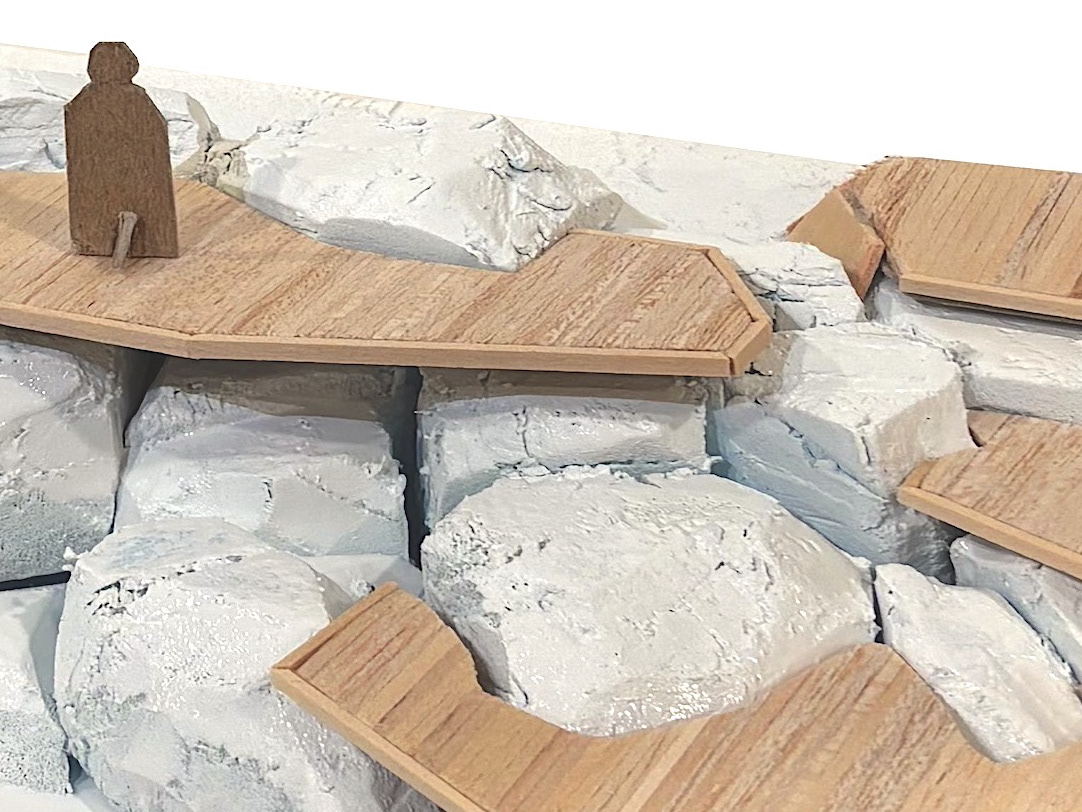
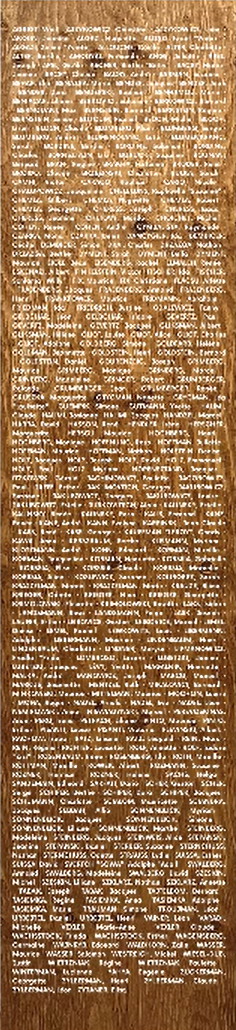
This written analysis is accompanied by a visual project that operates as an inquiry into how information shapes ethical engagement. Using a stained wood panel, an organic proxy for the corten steel steles on site, I project archival data related to Convoy 77, with a focus on the children deported from Bobigny.
The projection cycles through multiple representational states: the existing convoy data as displayed at the memorial; the names of the children deported; photographic portraits where archival images could be recovered; markers of absence where images were lost at Auschwitz; visual emphasis on those who died directly as a result of this deportation; and finally, a sequence of ages ranging from adolescents to an infant just fourteen days old.
Rather than offering a singular narrative, the project stages enumeration, naming, imagery, and absence in succession. By doing so, it asks when empathy emerges and for whom. While acknowledgment of historical fact is essential, it can remain administrative. Empathy, by contrast, demands an ethical reckoning with scale, specificity, and loss. This work does not assume empathy is guaranteed by representation; instead, it tests how different forms of information invite, or resist, moral engagement.
Bobigny Former Deportation Station Memorial
The former deportation station at Bobigny, located northeast of Paris, occupies a singular and uneasy position within the landscape of Holocaust remembrance in France. Between July 1943 and August 1944, approximately 22,500 Jews, many of them children, were deported from this site to Auschwitz-Birkenau. Yet for decades after the war, Bobigny remained largely unchanged, absorbed into industrial infrastructure and later a scrapyard. This prolonged absence of commemoration situates the site not only as a place of atrocity, but as a place of historical refusal.
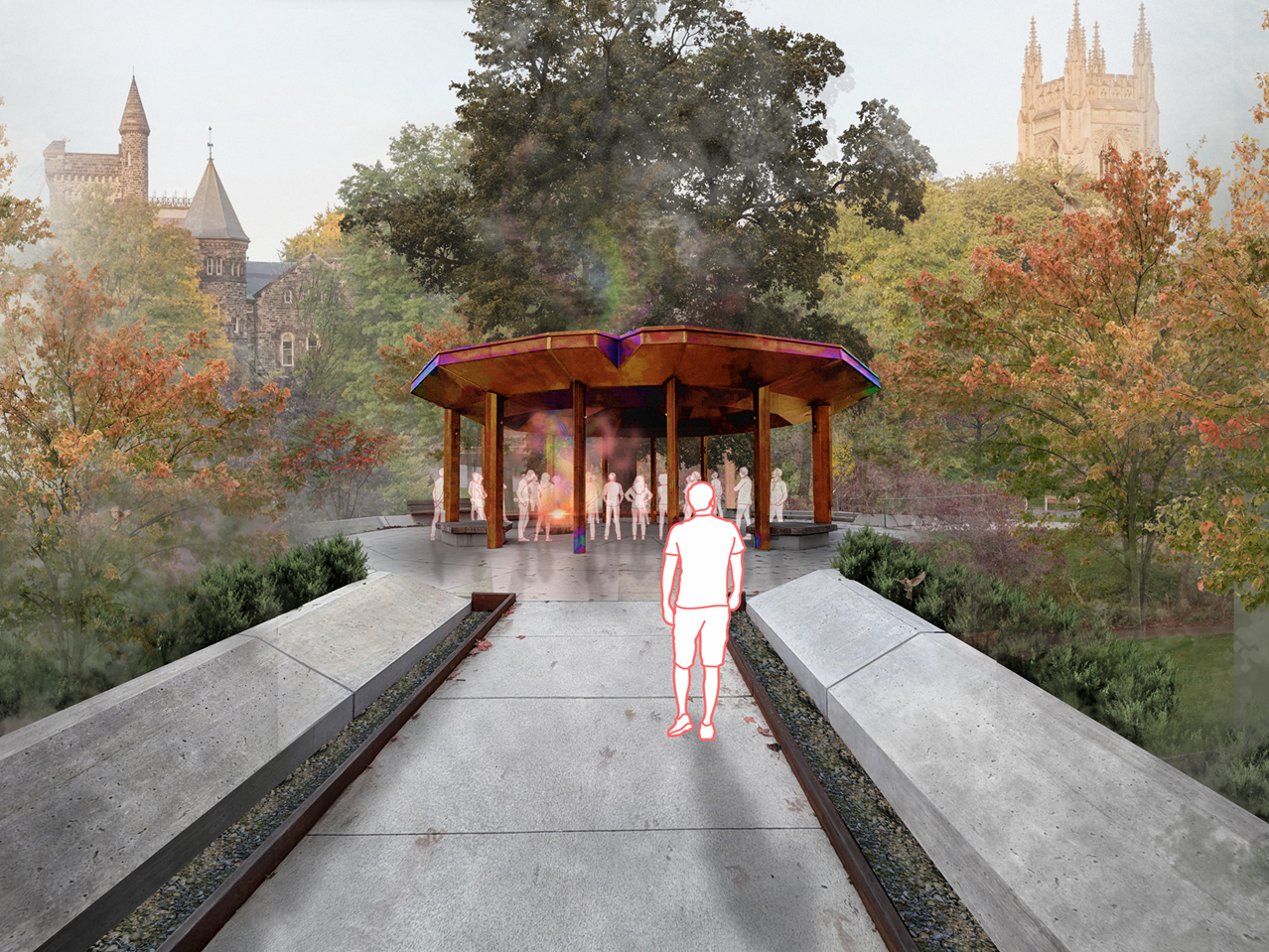
Completed in 2023, the memorial landscape designed by OKRA enters this context through a strategy of counter-monumental restraint. Rejecting figurative representation, heroic symbolism, or didactic narrative, the project emphasizes absence, spatial sequencing, and ecological continuity. Empty tracks are preserved, a minimalist steel platform evokes a “phantom wagon,” and vegetation is allowed to regenerate gradually across the site. Memory is positioned as open-ended and processual, activated through the visitor’s presence rather than imposed through form.
This approach aligns closely with James E. Young’s theory of the counter-monument, which critiques traditional monuments for externalizing memory and relieving viewers of responsibility (Young 2018). Young argues that counter-monuments resist permanence, refuse closure, and implicate the viewer in the labor of remembering. Bobigny adopts this logic almost completely. Yet when applied to a site marked by extreme violence and decades of erasure, this strategy raises difficult ethical questions.
Bobigny is not simply a site of loss; it is a site where loss was systematically obscured. As Richard Golsan and Henry Rousso describe through the concept of the “Vichy Syndrome,” postwar France struggled for decades to acknowledge its own role in the deportation of Jews, particularly children (Golsan 1993). The station’s conversion into a scrapyard and the early plaques emphasizing railway resistance rather than Jewish victims reflect this broader refusal of responsibility. Against this history, a memorial that relies heavily on abstraction and voluntary interpretation risks repeating, rather than resisting, the conditions of forgetting.
My research began with this historical record. Drawing from primary sources including the Klarsfeld memorial volumes, Convoi 77, and cross-referenced archival databases, I worked through deportation data associated with Bobigny: convoy numbers, dates, places of departure and arrival, ages, and survival rates. What emerged was not a singular narrative but a system; a highly ordered administrative process through which violence was enacted. Individuals were rendered legible through enumeration: as quantities moved through space, as lives were listed in columns, as numbers assigned to convoys. This was not incidental to deportation; it was its enabling condition.
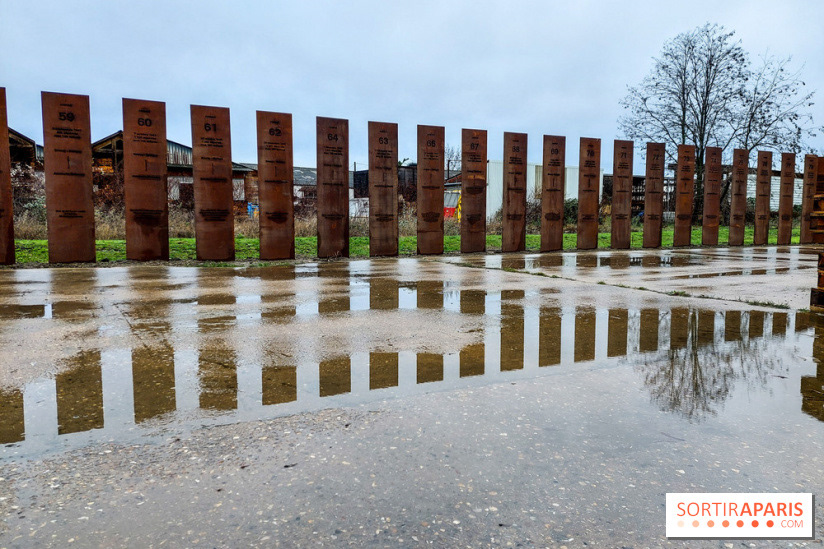
As I examined the memorial itself, my attention increasingly narrowed to the corten steel steles engraved with convoy data. These elements appear to ground the site’s abstraction in historical fact, drawing directly from Serge Klarsfeld’s documentation. Yet the more closely I examined them, the more they revealed a tension at the core of the project. The steles do not individualize; they organize. They present history through dates, routes, and quantities; the same logic through which deportation was administered.
Enumeration, however, is not neutral. As Zygmunt Bauman argues, the Holocaust was not only an ideological project but an administrative one, made possible through bureaucratic rationality, classification, and numerical abstraction (Bauman 1989). At Bobigny, history is rendered through the very system that enabled its violence. The steles do not name individuals; they count them. The question is not whether this information is accurate, it is, but whether accuracy alone produces ethical engagement.
This realization reframed my central inquiry. Rather than asking how a memorial should represent loss, I began asking when empathy occurs, and for what. Is empathy triggered by knowing that 1,308 people were deported on a single day? By learning that 327 of them were children? By encountering a name, a face, an age? Or does empathy emerge in the moment we recognize how bureaucratic systems transform lives into logistical units, and how easily that transformation becomes normalized?
Naming has long been understood as an ethical corrective in memorial practice. The Vietnam Veterans Memorial, Holocaust walls of names, and Stolpersteine all seek to restore individuality and resist anonymity. Yet historians caution that naming can also become procedural, another system of ordering that risks aestheticizing loss rather than confronting it (Bailey and Woytiuk 2018). At Bobigny, the refusal to name does not simply withhold empathy; it exposes the administrative violence embedded in archival systems themselves.
This exposure becomes more complex when considering the memorial’s reliance on reading. Julia Bryan-Wilson, writing on Rebecca Belmore, challenges commemorative practices that privilege immediate legibility and visual consumption (Bryan-Wilson 2018). Reading requires labor; meaning should not arrive effortlessly. At Bobigny, however, reading is optional. One may pass through the site without stopping, without learning, without discomfort. The memorial does not confront the body; it waits for the body to choose.
Here, the limits of counter-monumental openness emerge. Quentin Stevens and colleagues describe counter-monuments as dialogic, engaging in conversation with site, history, and visitor (Stevens et al. 2012). But dialogue requires participation. When engagement is entirely voluntary, memory risks becoming diffused. Everyday use can normalize the site, detaching it from historical urgency. This is particularly consequential at Bobigny, where recognition arrived so late and remains fragile.
Taken together, these conditions position Bobigny not as a failed memorial, but as a critical test case. It exposes the ethical limits of abstraction, enumeration, and voluntary engagement in memorial landscapes. It asks whether counter-monuments, once absorbed into everyday urban
life, can still confront historical violence or whether they risk aestheticizing absence into quiet neutrality.
Ultimately, Bobigny compels an uncomfortable question: what does a memorial owe its visitors, and what does it owe its victims? Is it enough to provide space for reflection, or must it demand something in return? Does empathy emerge through information, through identification, or through the frustration of what cannot be fully known?
The memorial does not answer these questions. Instead, it leaves them suspended, unresolved, unstable, and ethically charged. In doing so, Bobigny reveals both the power and the limits of the counter-monument. It reminds us that remembering is not only about what is shown or withheld, but about what is asked of us, and whether we are willing to respond.
Miro Document: CONVOY 77 of July 31, 1944 - Miro

Existing Info
Names of Victims
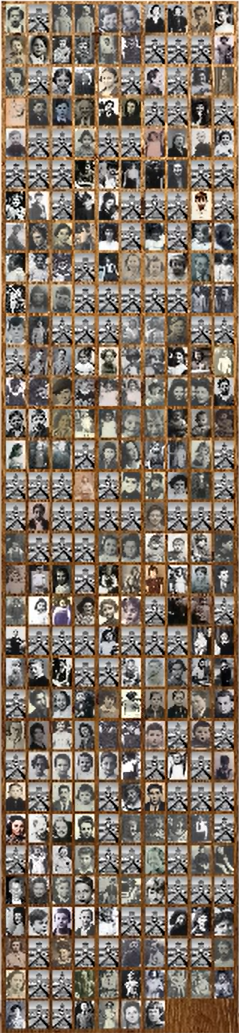
Images of Victims
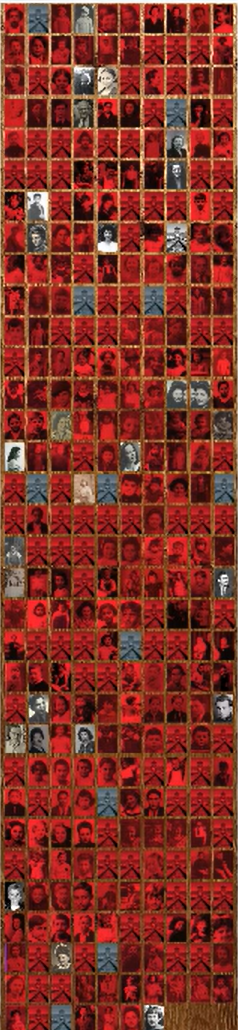
Victims killed during convoy 77
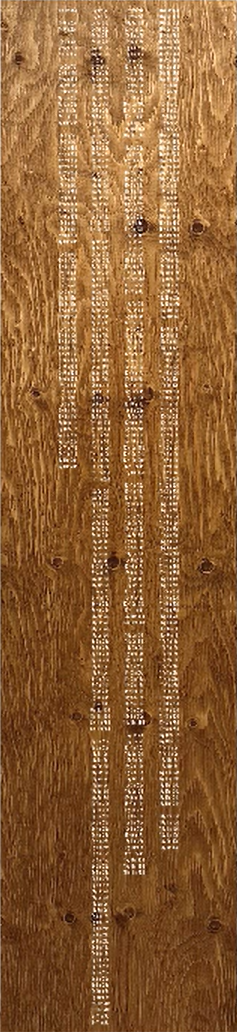
Ages of Victims
Symbol without text
References
Bailey, Stephanie, and Mark Woytiuk. “Remembering What Is Not Gone: Towards a Feminist Counter-Monument.” The Site Magazine 38 (2018): 53–59.
Bauman, Zygmunt. Modernity and the Holocaust. Ithaca: Cornell University Press, 1989.
Bryan-Wilson, Julia. “Rebecca Belmore: Material Relations.” Afterall: A Journal of Art, Context and Enquiry 45 (2018): 43–49.
Golsan, Richard J. “The ‘Vichy Syndrome’ and French Memory.” SubStance 22, no. 2/3 (1993): 370–375.
LaCapra, Dominick. Writing History, Writing Trauma. Baltimore: Johns Hopkins University Press, 2001.
Stevens, Quentin, et al. “Counter-Monuments: The Anti-Monumental and the Dialogic.” Journal of Architecture 17, no. 6 (2012): 951–972.
Young, James E. The Stages of Memory: Reflections on Memorial Art, Loss, and the Spaces Between. Amherst: University of Massachusetts Press, 2018.
Memory Resources and Sites
Fils et Filles des Déportés Juifs de France, Klarsfeld portal for online books and magazines published by the Klarsfelds or by FFDJF association
Serge Klarsfeld, Le Mémorial de la Déportation des Juifs de France (Klarsfeld, Paris, 1978)
Serge Klarsfeld, The Memorial to the Jews deported from France, 1942-1944 (Beate Klarsfeld Foundation, New York, 1983), english version of the 1978 memorial.
Serge Klarsfeld, Le Mémorial de la Déportation des Juifs de France (Fils et Filles des Déportés Juifs de France, Paris, 2012)
Serge Klarsfeld, Le Calendrier de la persécution des Juifs en France, Volume 1 and Volume 2 (Fils et Filles des Déportés Juifs de France & Beate Klarsfeld Foundation, Fayard, Paris, 2019)
Alexandre Doulut, Serge Klarsfeld, Sandrine Labeau, Les rescapés juifs d'Auschwitz témoignent (Fils et Filles des Déportés Juifs de France/Après l'oubli, Paris, 2005)
Alexandre Doulut, Serge Klarsfeld, Sandrine Labeau, Mémorial des 3943 rescapés juifs de France (Beate Klarsfeld Foundation/Fils et Filles des Déportés Juifs de France/Après l'oubli, Paris, 2018)
Serge Klarsfeld, French children of the Holocaust, a Memorial (New York University Press, New York, 1995)
Serge Klarsfeld, French children of the Holocaust, a Memorial, Volume 2 (Fils et Filles des Déportés Juifs de France, Paris, 2016)